Playing All the Keys: Emotional Intelligence and the Power of Feeling with Intention
A soulful approach to emotional awareness and presence.
Elegant Aging from the Inside Out.
Have you ever asked, “What is emotional intelligence—and how can it change the way we live and age?” If so, you’ll want to read this month’s blog post.
Emotional Intelligence Through the Lens of Elegant Aging
In the Elegant Aging way of living, emotional intelligence isn’t about fixing yourself or managing emotions—it’s about cultivating a deeper, more trusting relationship with who you truly are.
It’s the quiet confidence that comes from knowing your inner world—recognizing your emotional patterns, honoring your feelings without being ruled by them, and responding to life with intention rather than habit.
As we age, emotional intelligence becomes less about reacting and more about refinement. We begin to notice what drains us and what nourishes us. We become more discerning with our energy, our time, and our truth. Emotional intelligence allows us to soften without collapsing, to speak clearly without defensiveness, and to hold both tenderness and strength at the same time.
This is where Elegant Aging begins—not on the surface, but within.
When emotional intelligence is cultivated with compassion and awareness, aging is no longer something to resist. It becomes an initiation into deeper presence, wiser choices, and a more graceful relationship with ourselves and others.
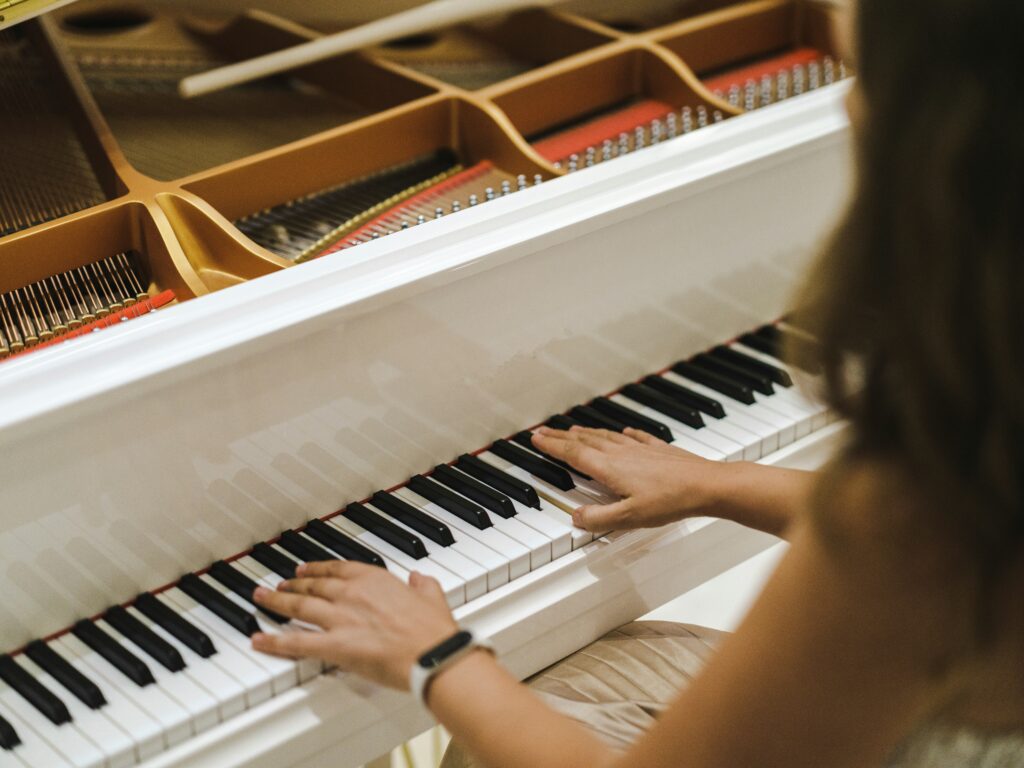
We’re taught, implicitly and explicitly, that some emotions are “good” and some are “bad.” So, when fear, anger, sadness, or shame arrives, we either shove them down and keep going, or we collapse into them and let them run the show. Both responses narrow our internal repertoire — like a pianist who plays the same three notes while an entire keyboard waits unused.
Imagine, for a moment, your emotionally intelligent life as a piano. In this image, each key represents a different feeling: joy becomes a bright high note; grief, a resonant low tone; curiosity, a wandering middle register; anger, a sharp staccato; and tenderness, a slow, lingering chord. When, over time, you learn to play all the keys with skill and intention, you create full music—dynamic, expressive, and alive. However, when you become stuck on only a few keys—defensiveness, numbing, relentless optimism, or chronic anxiety—the song begins to flatten into repetition. As a result, life feels stuck. Relationships grow rigid. And creativity slowly dwindles.
Feeling with intention is how you learn to play the whole keyboard.
The information hidden in your emotional range
Each emotion carries information. Not opinions. Not commands. Data.
Fear alerts you to perceived threat or vulnerability.
Anger signals a boundary crossed or a value violated.
Sadness points to loss, letting go, or the need for rest and tenderness.
Joy reveals alignment, meaning, and what wants more expression.
Shame highlights where belonging feels at risk.
Curiosity opens pathways to learning and growth.
When you restrict your emotional range, you restrict the information available to you. You begin making decisions with partial data — like navigating with only one instrument panel lit up. But when you allow yourself to feel the full spectrum with intention, your inner system becomes more intelligent, not more chaotic.
This is why emotional flexibility matters. It’s not about indulging emotions or being ruled by them. It’s about listening long enough to understand what they’re communicating — and then choosing your response wisely. When felt consciously, emotions become guidance rather than obstacles. Instruments, not enemies.
What “feeling with intention” means
• Notice without judgment:
Intention begins with noticing. Instead of “I shouldn’t feel this,” register, “I’m feeling X.” Naming reduces overwhelm and creates distance.
• Allow rather than amplify or avoid:
Let the feeling be — neither ruminating nor suppressing it — and give it space to surface naturally.
• Curiosity first:
Ask: Where do I feel this in my body? What triggered it? What story is attached? Curiosity turns reactivity into inquiry.
• Choose your response:
Awareness lets you act from choice rather than impulse — set boundaries, reach out, rest, or create as needed.
• Practice self-compassion instead of self-judgment:
Think of yourself as a beginning pianist—patient, encouraging, and consistent. And when your inner critic inevitably shows up, pause and intentionally respond with kindness and gentle curiosity. In doing so, self-compassion begins to soothe the nervous system and, as a result, makes it feel safer to experience even the hardest emotions.
A student of mine from the Hoffman Process last December shared with me this week that he’s deeply grateful I didn’t try to rush him through his pain by saying, “It’s okay, you’ll feel better by the end of the week.” Instead, I stayed present and held space. By doing so, I encouraged him to feel his feelings and allow them to emerge in their own time. As a result, that steady presence supported his healing and, in turn, helped him reconnect with the essence of his authentice self—rather than identifying only with his pain.
You already have enough to begin
What you already have is sufficient to begin living—right now. You don’t need perfect skills, complete answers, or even the “right” moment. Instead, simply noticing one feeling and staying with it for a single breath is enough to begin. From there, you start playing a new phrase on your inner piano.
Permission and presence are the simplest instruments. They don’t require extra resources — only willingness.
Why this matters
• Emotional flexibility fuels resilience and adaptability
• Relationships deepen when you show your full range
• Creativity and flow expand as you access more internal notes
• Health improves when you stop suppressing or hyper-arousing
• Small starts build momentum — using what you have now expands capacity
Simple practices to get started
• Labeling: Pause three times a day and name one feeling. Breathe for 30 seconds with that label.
• Body scan: Map where the emotion sits and tend to it with soft curiosity.
• Micro-holding: Allow the feeling for 2–5 minutes without acting. Observe shifts.
• Journaling: Start a sentence with “I’m feeling X because…” to trace triggers and patterns.
• Self-compassion check-in: When you notice self-judgment, ask, “What would I say to a friend?” Offer that phrase to yourself for one minute.
• Expand your repertoire: List emotions you rarely allow and invite one into awareness each week.
• Start small, start now: Use what you have — a breath, a name, a minute of curiosity — as today’s practice.
Closing chord
Playing all the keys doesn’t mean being overwhelmed constantly. It means learning to move across the keyboard with skill and intention. Emotions become information and instruments — not prisons or enemies.
You don’t need more than this moment and your willingness to begin.
Start with one key you’ve been avoiding.
Play it.
Listen.
Offer yourself compassion.
Then let your hands explore the rest of the keyboard.
Thank you for taking the time to read this!
Love and Elegance, Helen
Sign up for my monthly Wisdom Drop for practical reflections and practices delivered to your inbox, Lumina Circle to deepen your practice with a supportive community and guided sessions.
Ready to practice this—not alone, but supported?
Reading is a beginning. Living it is where change happens.
The Lumina Circle is a gentle monthly space for women who want to embody what they’re learning—feeling their emotions with intention, expanding emotional flexibility, and aging with wisdom, presence, and inner radiance.
Each month inside Lumina Circle, you’ll receive:
- A soulful theme to anchor your inner work
- A guided Lumina meditation to support your nervous system
- A reflective journal practice to deepen awareness
- A simple Elegant Aging practice you can integrate into real life
- A warm, supportive community walking this path with you
✨ If you’re ready to play all the keys of your emotional life—with compassion, clarity, and grace—Lumina Circle is here to support you.